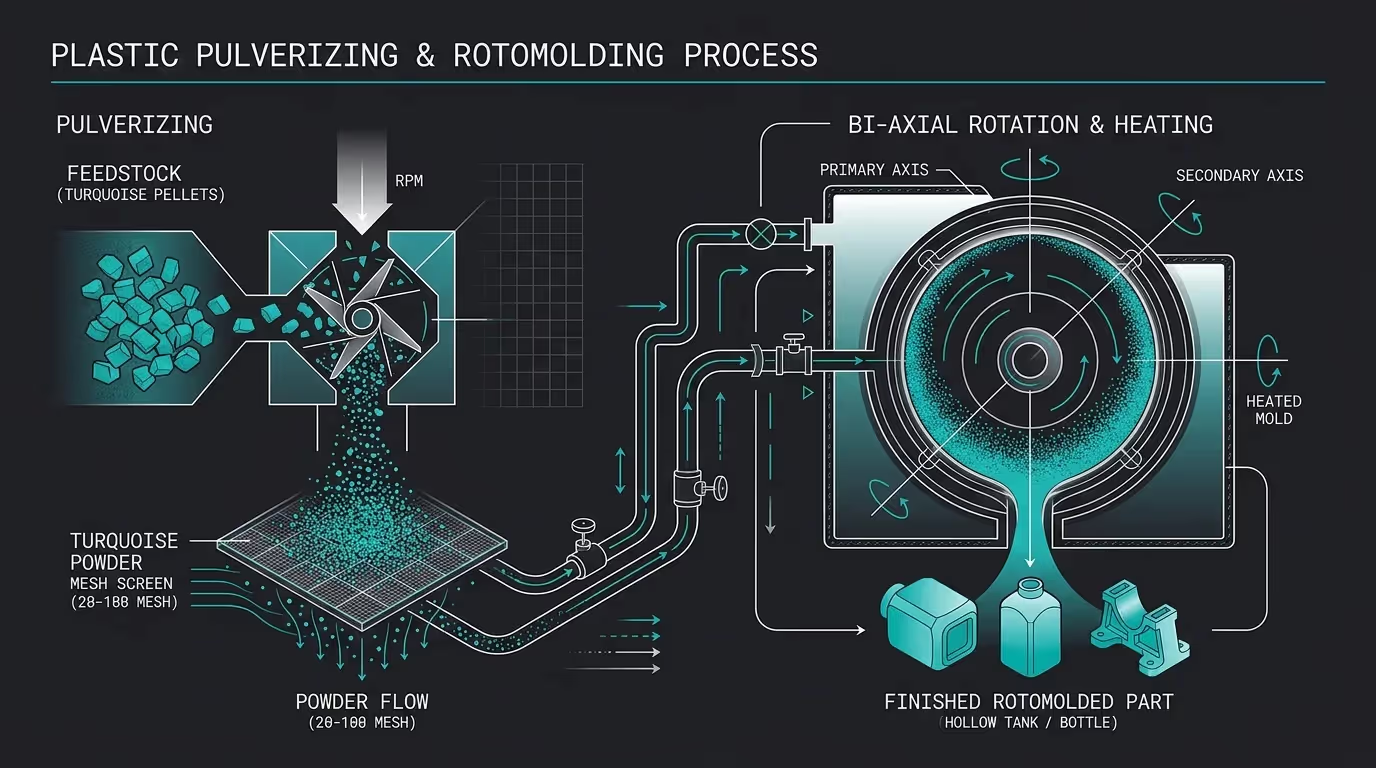
Rotational molding (often called rotomolding) is a highly effective manufacturing process for producing hollow, one-piece plastic items—ranging from massive industrial water tanks and agricultural bins to playground equipment and kayaks. However, unlike injection molding or extrusion, rotomolding does not rely on high pressure to force molten plastic into a mold.
Instead, it is a low-pressure, gravity-driven process where fine plastic powder is slowly heated as the mold rotates along two axes, coating the inner walls layer by layer.
Because pressure is absent, the physical characteristics of the starting powder are the single most critical factor in determining the quality of the final part. Voids, pinholes, thin walls, and brittle spots are almost always traced back to poor powder quality. This is where the plastic pulverizer plays a crucial, non-negotiable role.
For technical specifications on industrial-grade grinding systems, you can review the plastic pulverizer equipment page.
Why Rotomolding Demands Specialized Powder (Not Just Flakes)
You cannot simply dump recycled plastic flakes or virgin pellets into a rotomolding mold. If you do, the material will not distribute evenly, leaving huge air pockets and incomplete walls. Rotomolding requires powder, and not just any powder—it requires powder with specific geometric and physical properties:
- Dry Flowability: The powder must flow smoothly into every nook, cranny, and sharp corner of the mold under nothing but gravity.
- High Bulk Density: The loose powder must pack tightly together so that when it melts, it forms a dense, solid wall without trapping air.
- No Fluff or Tails: Ground particles must have a clean, roundish, three-dimensional shape. Long, stringy “tails” or fluffy fibers cause the powder to bridge and clump, leading to voids in the product.
Critical Powder Metrics for Rotomolding Success
When processing material (like LLDPE, HDPE, or PP) through a rotomolding pulverizer, operators must constantly monitor three core metrics:
1. Particle Size Distribution (The Mesh Count)
For rotational molding, the standard particle size is typically 35 mesh (approx. 500 microns).
- If the powder is too coarse (e.g., larger than 30 mesh), the particles will take too long to melt, resulting in a rough “orange peel” surface on the final product and trapped bubbles within the walls.
- If the powder is too fine (e.g., smaller than 100 mesh), it will melt too quickly, potentially burning or degrading before the thicker particles melt, reducing the impact strength of the finished part.
A premium pulverizer must deliver a narrow particle size distribution, meaning the vast majority of the ground powder falls squarely within the target 30–50 mesh range.
2. Dry Flow Rate (Pourability)
Dry flow is measured by how long it takes for a specific volume of powder to pour through a standardized funnel. A faster flow rate means the powder will coat the mold evenly as it rotates. If a pulverizer runs too hot, the plastic will begin to soften and stretch during grinding, creating jagged “tails” on the particles. These tails hook together, ruining the flow rate and causing wall thinness in complex mold corners.
3. Bulk Density
Bulk density refers to the weight of the powder per unit volume. High bulk density is vital because it determines how much material can be loaded into the mold and how tightly it packs. Tight packing ensures that as heat penetrates the mold, the air escapes outward, leaving a pore-free, highly durable plastic wall.
How Premium Pulverizers Ensure Perfect Powder Quality
Modern, industrial-grade disc pulverizers achieve these strict powder standards through precise mechanical control and advanced thermal management:
Precise Gap Control
The distance between the rotating grinding disc and the stationary disc determines the primary shear rate. High-end pulverizers allow operators to adjust this gap down to the micrometer level. This ensures that the feedstock is sheared cleanly rather than smashed, preserving the structural integrity of the polymer chains and avoiding “tails.”
Advanced Temperature Management
Grinding plastic generates massive amounts of friction and heat. If the temperature inside the chamber climbs too high (nearing the melting point of PE or PP), the plastic becomes rubbery. Instead of fracturing, it stretches, generating fluffy particles that cannot flow. To prevent this, industrial pulverizers utilize:
- Water-jacketed cooling chambers: Cooling water circulates around the grinding plates to absorb heat instantly.
- Forced air conveying: High-velocity cold air sweeps the ground powder out of the chamber immediately, preventing thermal buildup.
Automatic Screening and Oversize Recirculation
A closed-loop system is essential for rotomolding powder production. The ground powder is continuously vacuumed into a vibrating sifter. Particles that meet the mesh specification (e.g., 35 mesh) pass through to the collection silo. Any oversized particles are automatically fed back into the pulverizer chamber for a second pass, guaranteeing 100% consistent output.
Selecting the Right Rotomolding Pulverizer Setup
When configuring a pulverizing line specifically for rotational molding:
- Prioritize Disc Grinders: High-speed disc pulverizers are the industry standard for LLDPE, HDPE, and PP grinding due to their high throughput and ability to produce spherical, high-density powder.
- VFD (Variable Frequency Drive) Control: A VFD on the main motor allows you to tune the rotor speed to match the specific thermal and physical properties of your polymer feedstock.
- Metal Separation: Always install magnetic separators and metal detectors on the input line. A tiny piece of metal entering the high-speed grinding discs will ruin the teeth instantly, leading to costly downtime and contaminated powder.
To explore options for upgrading your plastic size reduction capabilities, visit this plastic pulverizer equipment comparison.
Summary: Powder is the Foundation of Rotomolding
In rotational molding, you cannot mask poor raw material quality with high pressure. If your powder lacks flowability, density, or uniform sizing, your final product will fail quality tests.
By integrating a specialized plastic pulverizer with temperature regulation, precise gap adjustment, and automatic classification, you can consistently produce high-grade PE/PP powder that melts smoothly, flows flawlessly, and delivers premium, void-free rotomolded products every single shift.